Discover the Microclimates in Your Garden

Connie Cottingham • February 4, 2010

While in college, one of my design classes spent a few days in Boxley Valley along the Buffalo National River in Arkansas to analyze this historic site for a project. Emerging from our tents in the cool morning, desperate for a hot cup of coffee, our instructor pointed out the other tent in the campground. That tent was covered with frost while ours, sited under evergreen trees, were not. The evergreen canopy kept our tents a few degrees warmer and protected from frost.

While studying landscape architecture I heard many lectures on microclimates: south slopes are warmer than north slopes, cold air settles into valleys, morning sun is less harsh than afternoon sun. But seeing and feeling the difference in microclimates within that small campground was a vivid and memorable lesson-a few feet in one site can make a difference.

The moment you realize that your property is made up of many little microclimates you instantly become a better gardener. There is a reason why the azalea planted where it receives irrigation and afternoon shade is thriving in your neighbor’s yard, while yours, under the same cluster of pines but receiving afternoon sun and little water, is stressed. A few feet in a garden can make a life or death difference to a plant, which is why gardeners move plants that do not seem to be happy.

Our property is a high point for our neighborhood, so I hesitate before bringing moisture-loving plants into my garden. Moisture loving trees are simply not an option for this site. I refuse to garden without hydrangeas and hostas, which love water and are favorites of the browsing deer. So these are clustered together under an old pecan tree that I revere. When I ration water during a drought, this area is the last to be denied our precious well water.

A few feet from the pampered hydrangeas is a red maple, which seems to claim all available sunlight and moisture from the raised bed around its trunk. Several plants have perished in that extreme environment; the proven survivors for such dark, dry, deciduous shade are spring bulbs, epimediums and columbine.

OK, so let’s take a quick walk around your home and look at typical microclimates. The east side receives the morning sun and afternoon shade. The south side gets sun for most of the day. The west side stays shaded in the morning, then gets brutal afternoon sun. The north side stays pretty shaded, but can get afternoon sun in the hottest part of the year. Sounds simple, but few of us live in a rectangle in the middle of a field. The many angles and height of the house, trees, fences, pavement, moisture, soil composition, wind, and more affect your plants. A windy site may dry out foliage. A sheltered area may allow you to grow a plant rated for one zone south (at least for a few winters). Near my home hydrangeas are placed near the downspouts on the east side-sites that offer both afternoon shade and moisture. Rosemary thrives in the brutal area under the south eaves that gets plenty of sun and limited rain.

A plant that can take full sun in Michigan may not be able to handle full sun here in the Southeast. For us ‘part shade’ means morning sun and afternoon shade, while any location that receives three to four hours of afternoon sun, even if it is in the shade until 2:00 in the afternoon, counts as a ‘full sun’ site when selecting plants.

The best way to know your garden is to spend time in it throughout the year, learning where the water flows, where the sun shines at different times of the day and year, and which plants seem happy. To further complicate things, a garden is constantly changing, with trees growing and dying, changing sun angles and more. A few years ago drought tolerant plants were all anyone wanted to talk about here. But weather is always changing. Plants that are suited to a site are the healthiest and the healthiest plants will be best able to survive any weather extreme.

Yes, you can learn about gardening from a book, but the best way to know your garden is to garden in it. You will kill some plants (every gardener does) and move others, you will make mistakes, but you will also find out what works well for you and build on successes. Being aware of the microclimates within your garden will help you be a more successful gardener.

(adapted from an article first published in Lee Magazine, May 2008)
By Connie Cottingham • September 25, 2026
One beautiful plant at Lewis Ginter Botanical Garden made me rethink that.
By Connie Cottingham • September 15, 2026
Thanksgiving week 2024: a fun, memorable family gathering that lasted for days in my niece’s new home in Atlanta. Still, I took the opportunity to hide in the guest bedroom for a moment because I had promised myself I would unapologetically find a treasure among the many Black Friday sales. And what to my wondering eyes should appear? Roses! The treasure I found was four own-root roses from Heirloom Roses . Not electronics. Not fashion. Roses. Yeah, surprised me too. I recently wrote about the New Dawn rose that has now reached the top of my backyard arbor. The other three were planted closely together until I could build and fill more raised beds. Then numerous peonies came into my life, a few refugees from other beds had to be moved and, well, these three roses are still in the same spot and way too close together. That won’t change anytime soon.  What also doesn’t seem likely to change is this insufferable heat and drought. Ten inches of rain in June, none since. Temperatures linger in the 90s and triple digits, and the forecast stays hot and dry through August 23
By Connie Cottingham • September 9, 2026
There is something slightly thrilling about standing in a world-famous garden and realizing that, for the moment, nobody else seems to be there. Public gardens are meant to be public. I love seeing people enjoying them, especially children encountering a garden for the first time. The more people who experience gardens and nature, the better. But every once in a while, through luck, timing or a little audacity, I have found myself practically alone in one.  Those quiet hours remain among my most magical travel memories
By Connie Cottingham • August 24, 2026
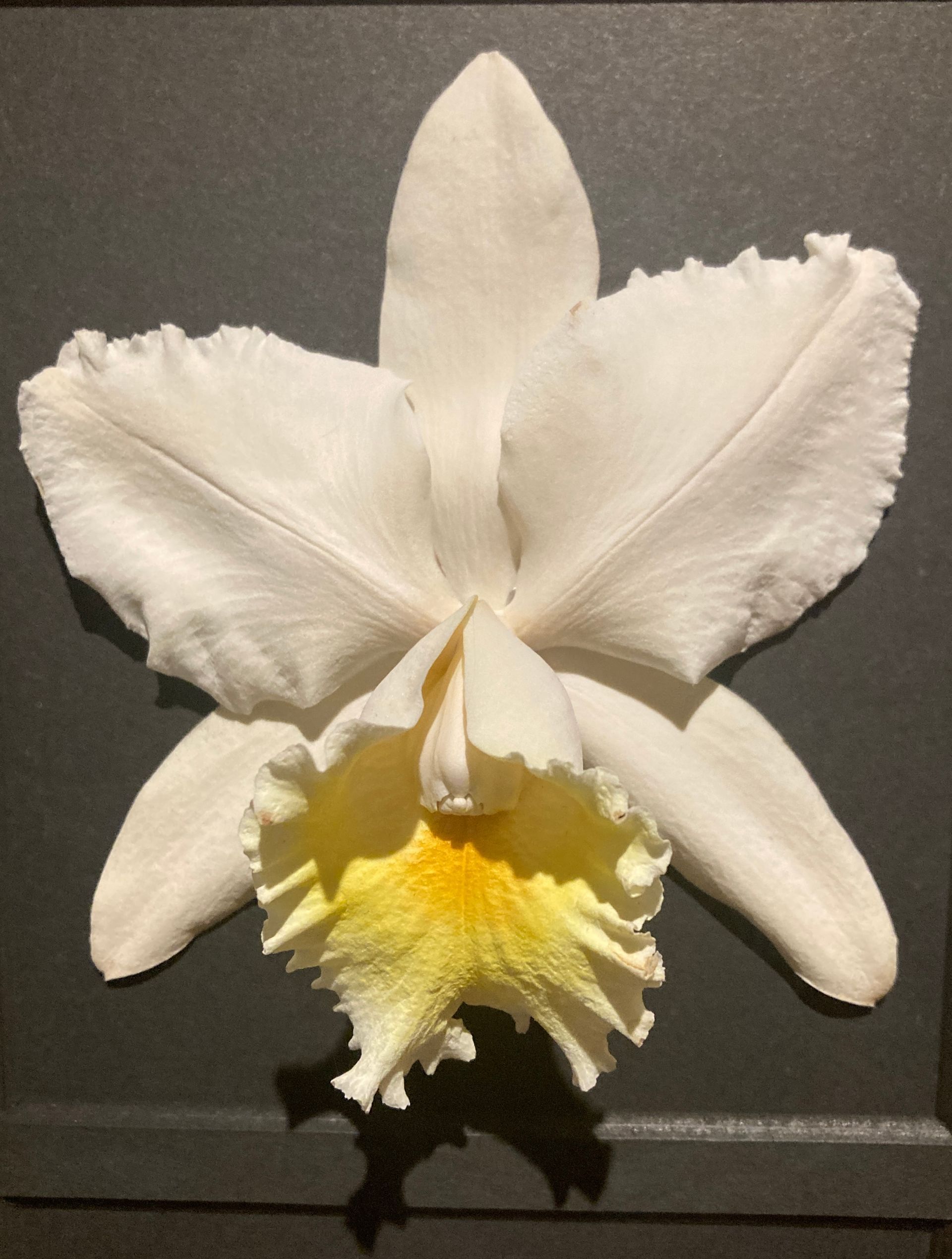
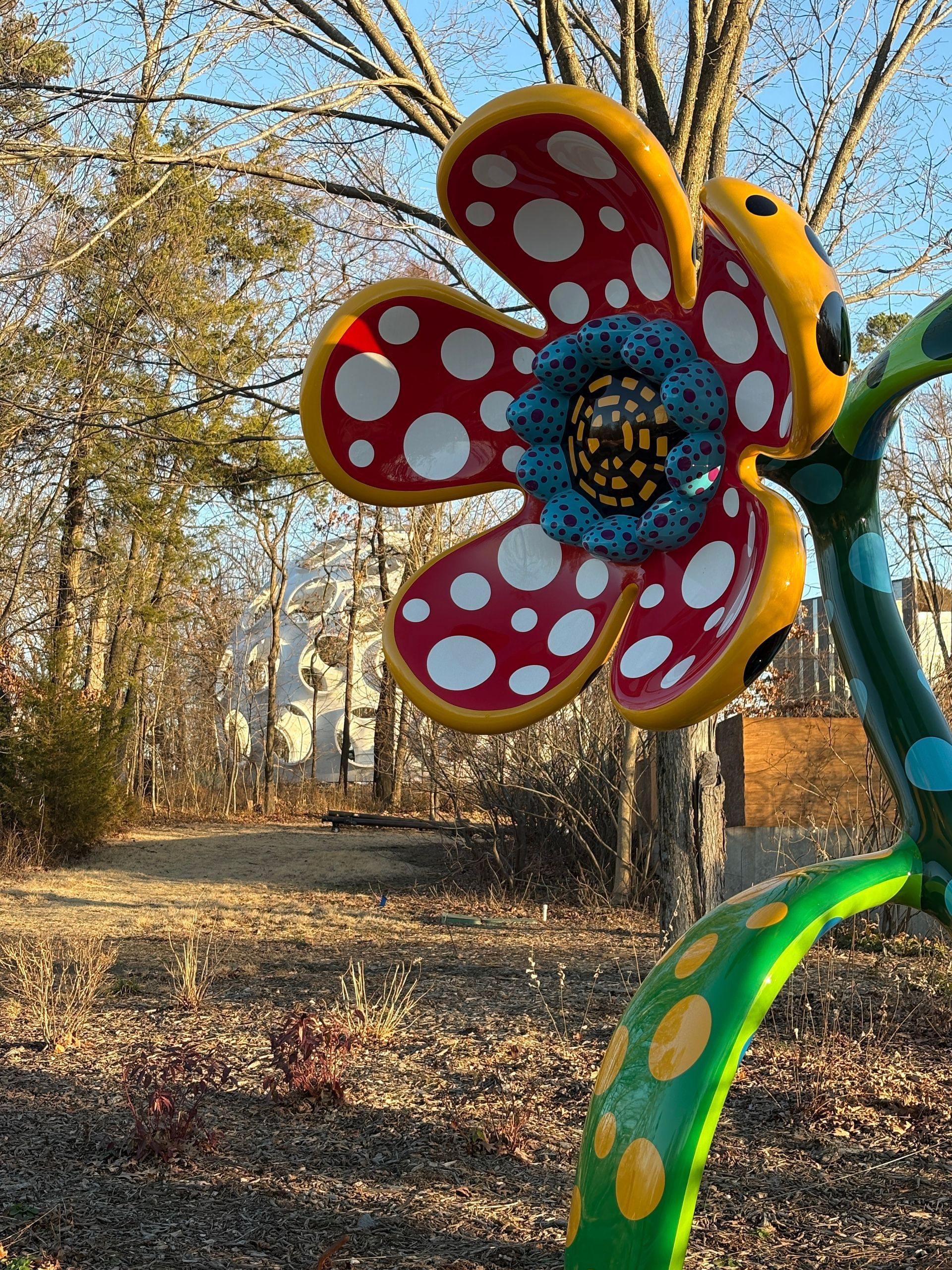
The photo is from the 2024 exhibit "Exquisite Creatures" at Crystal Bridges Museum of American Art, Bentonville, AR.
By Connie Cottingham • August 17, 2026
George Washington Carver National Monument in Diamond, Missouri
By Connie Cottingham • February 26, 2026
Everyone is talking about the grand reopening in June. More space. More galleries. More excitement. But waiting means missing something special. Here are eight reasons why I think now is one of the best times to visit Crystal Bridges Museum of American Art. It’s free – which expands your freedom. Yes, parking and admission here are always free. That’s easy to take for granted since most Bentonville area museums do not charge admission. But that free admission means you don’t have to think about your budget and time in the same way as if you were paying a $20-40 entry fee. You can stop in to join a tour or fill time between appointments by visiting one gallery.
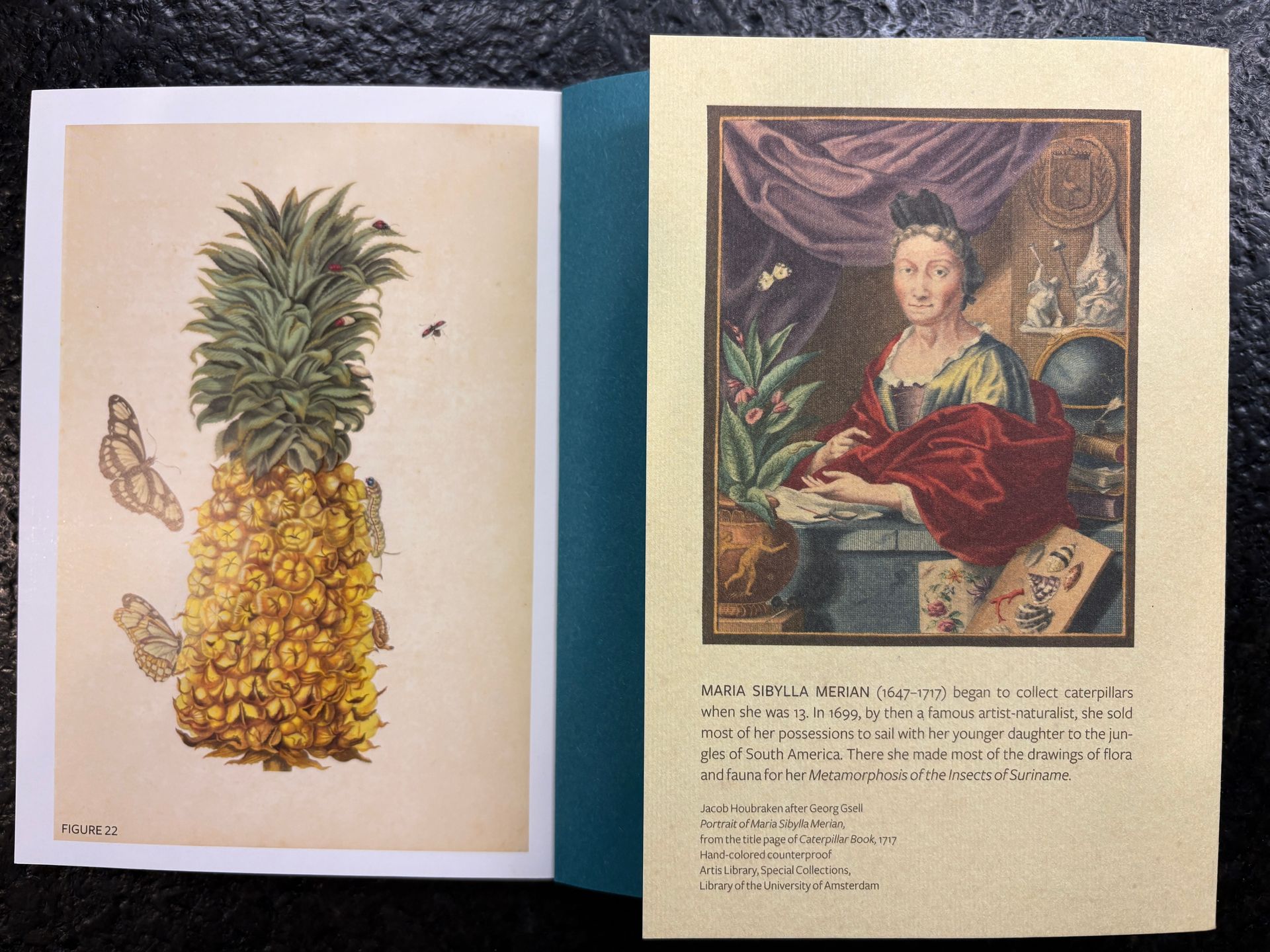
Greeting card: Pineapple art print and portrait of woman with text.
By Connie Cottingham • February 22, 2026
An exhibit on Maria Sibylla Merian is currently on display at the Philbrook Museum of Art in Tulsa, Oklahoma. Drawn from a private collection, the works are well worth seeing. So is Philbrook itself—a 1920s historic estate built during Tulsa’s oil boom and now home to a museum surrounded by beautiful gardens. Art, architecture, and gardens together in one place? Definitely my jam. Who is Maria Sibylla Merian? Well, if anyone asks me who my favorite artist is, who is one of my sheroes, it’s Merian. She was a botanical illustrator, scientist, explorer. She was also fearless, curious, groundbreaking, and well-traveled. She was a single mother. She was open to other cultures and deduced her own opinions. She sold everything and brought her daughter with her to another continent at age 52. Oh, and she lived from 1647 to 1717.
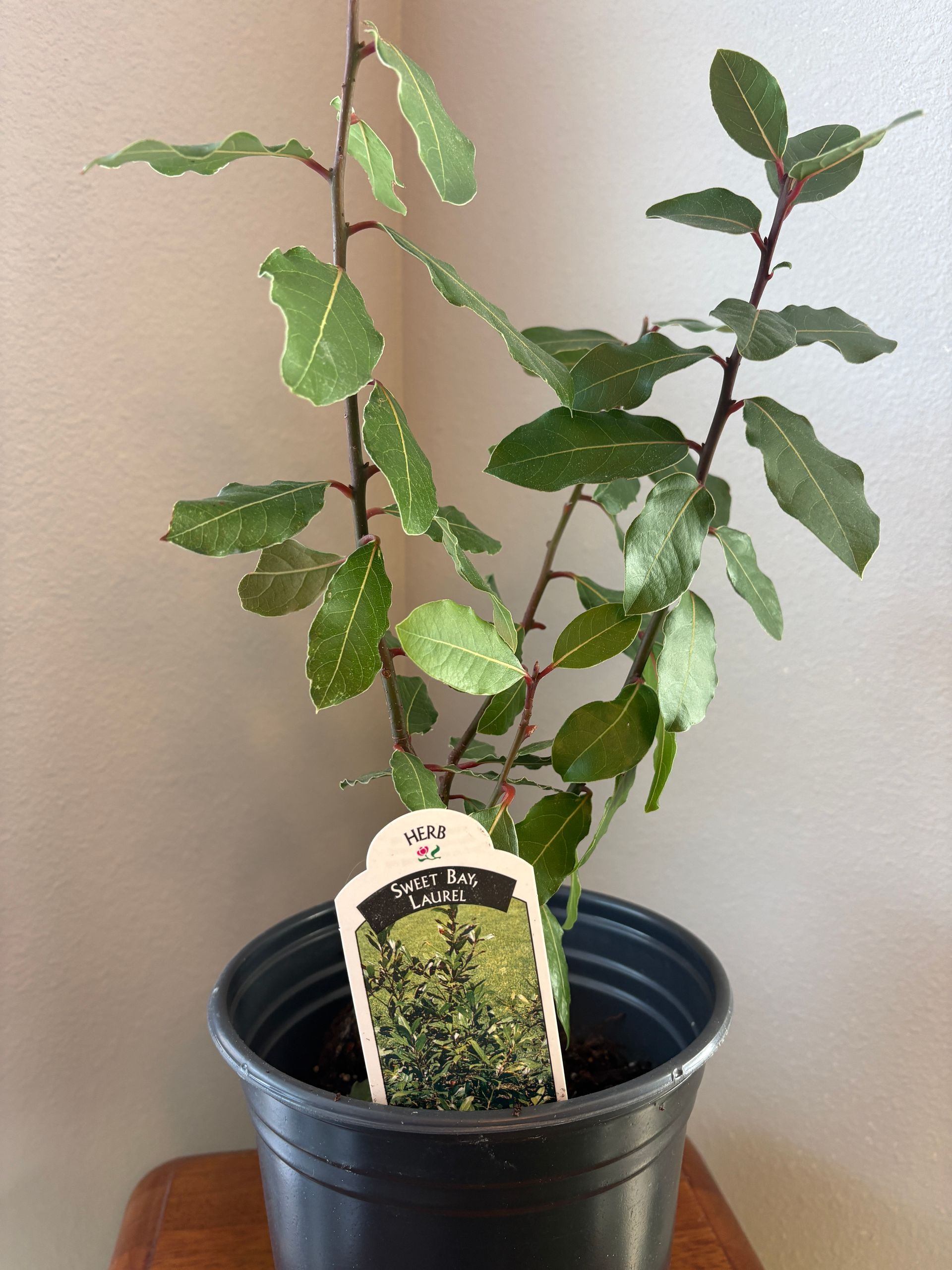
Bay laurel plant in a black pot, with green leaves, and a plant tag.
By Connie Cottingham • February 22, 2026
“Add a couple bay leaves,” suggested a friend. I had been moaning that I had looked everywhere I could think and could not find Bruce’s pinto bean recipe. Soak the beans overnight, add onions, ham, cumin, salt, and pepper into the Crock Pot. I found a similar, delicious recipe, but it was not the recipe. And Bruce’s recipe did not include bay leaves. But Kris said every bean recipe should have a bay leaf. And there is a bay tree on my windowsill. OK—at about 14 inches tall, tree may be a bit of an exaggeration. Bay leaves are commonly used in Mediterranean, French, and Spanish cooking, adding a subtle, savory flavor. Bay is also traditionally recommended to help with upset tummies, flatulence, and digestion. Ah—so that is why you toss bay into pots of beans. I hadn’t heard that before. Nor did I know bay leaves are sometimes boiled into custards.  During my snowed-in week, I made two pots of soup and a pot of beans, snapping off a leaf or two of bay and harvesting from the vase of sage and rosemary for the soups. My bay has adjusted well to indoor life and has plenty of leaves to share. Fresh bay leaves are a bit stronger than dried—one book describes the fresh flavor as “more eucalyptus-y.” I’ve always thought of bay as very mild. Although they are evergreen trees in the Mediterranean, bay (Laurus nobilis) takes well to pruning and can be grown in a container. I plan to keep mine a manageable two feet tall and happily invite it into my kitchen every winter. If you see a bay plant, I recommend buying one. None of my books recommend growing them from seed, and it can take a year or more to grow one from a cutting.
By Connie Cottingham • October 1, 2025
1. The locals know which destinations suit your interests The people who work and volunteer are proud of their town and happy to have you discover all it has to offer. Once you start talking, they will light up as they give suggestions on what would interest you. Yes, there may be an abundance of breweries in an area, but a visitor center singled out the one that was also a cut flower farm to me. 2. Free parking while you get your bearings It takes a moment to figure out what is what in a new town. Many visitor centers offer free parking while you plan your visit with helpful staff and volunteers. 3. Restrooms and coffee ... welcome finds on a road trip. 4. Warnings and options When I mentioned that I wanted to experience the Blue Ridge Parkway on the way home in the Hendersonville (NC) Welcome Center, they warned me that weather had shut a segment down. They suggested another route where I enjoyed an outdoor lunch, art galleries, and a scenic drive home. Visitor centerscan also point out festivals and events to either enjoy or navigate around. 5. Gift shop A visitor center gift shop often carries postcards, local products, shirts, books, and other keepsakes to remember your trip. I seek out stickers to label my travel journals with the destinations inside.Photo in text here 
By Connie Cottingham • September 24, 2025
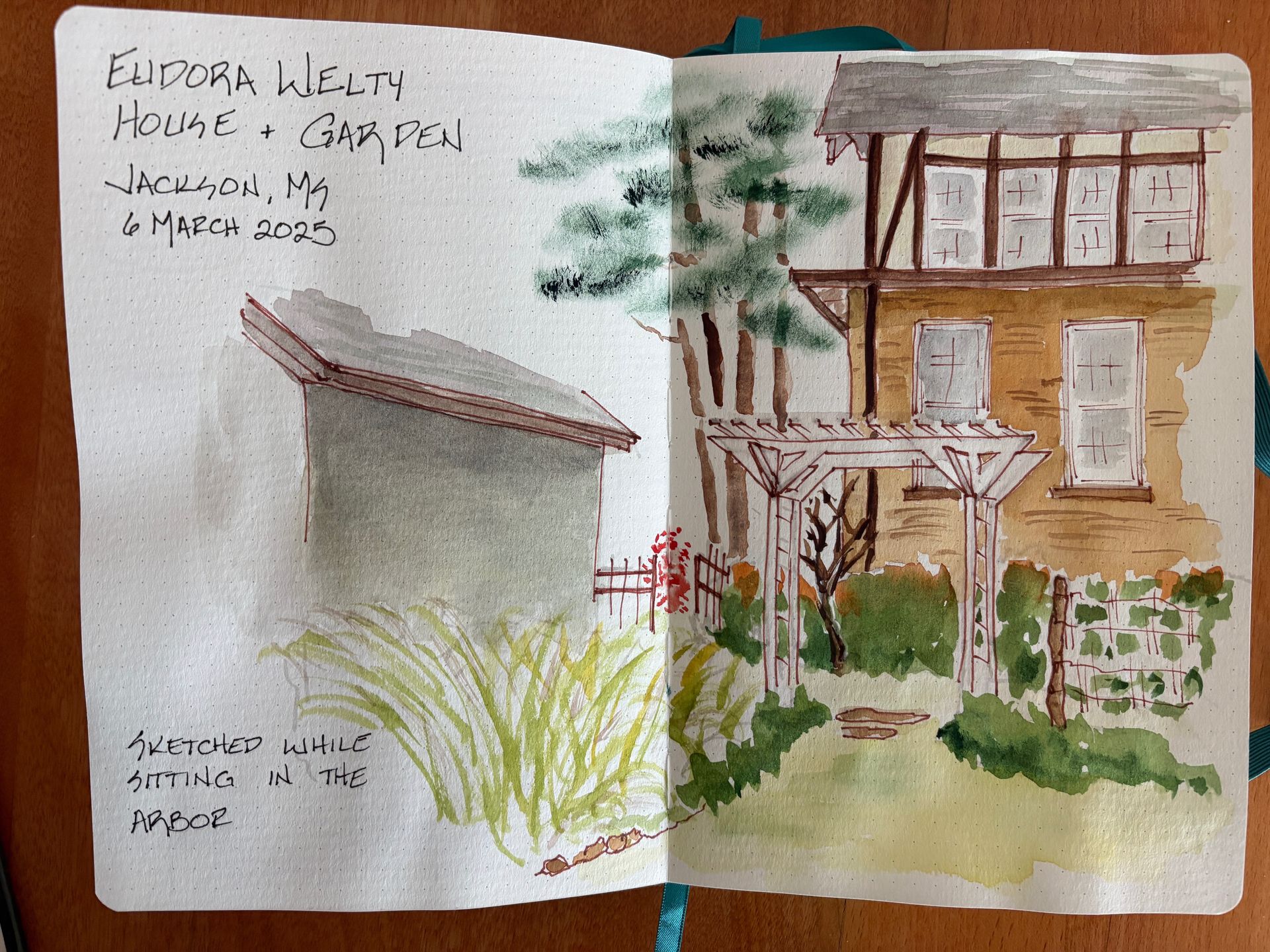
Travel Sketching: A Secret Tool for Authentic Travel Writing Sketching is a way to experience and capture moments, emotions and a location.